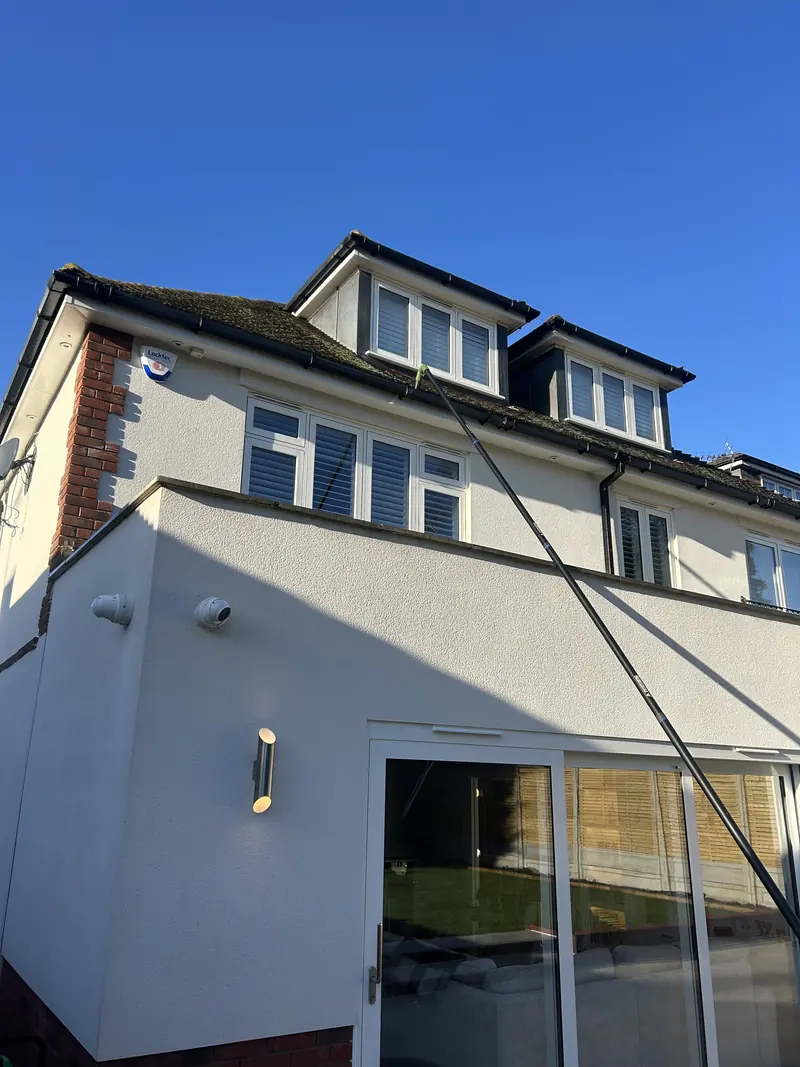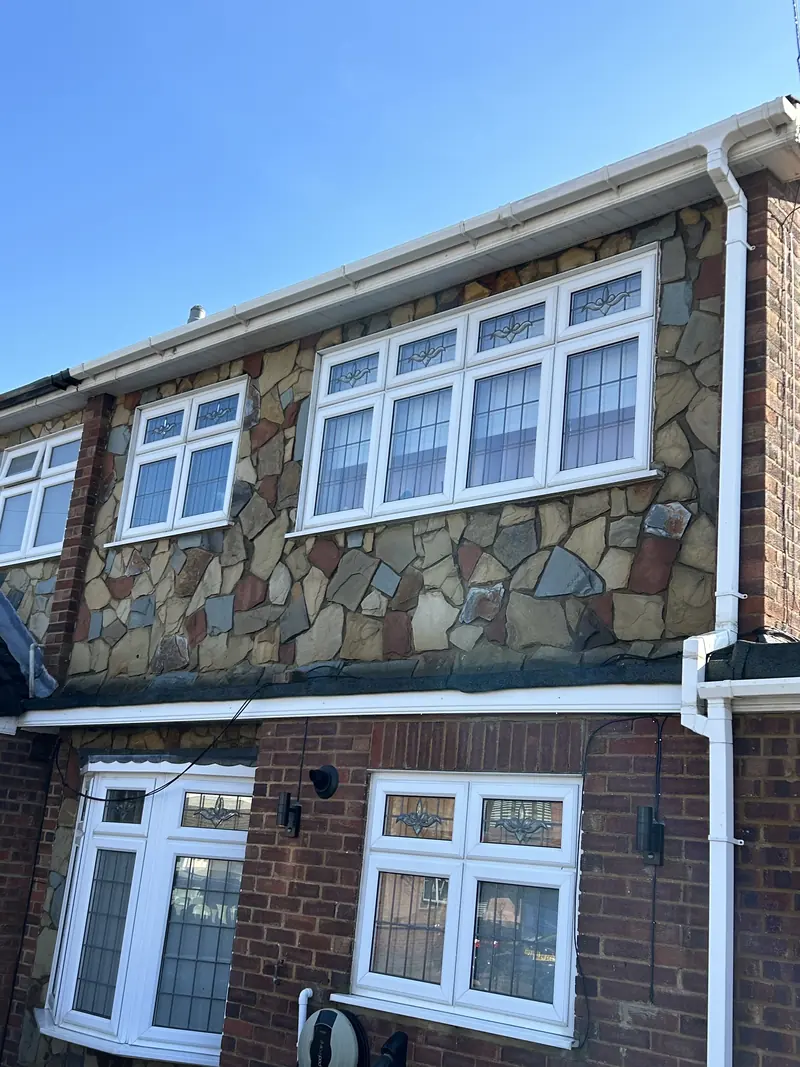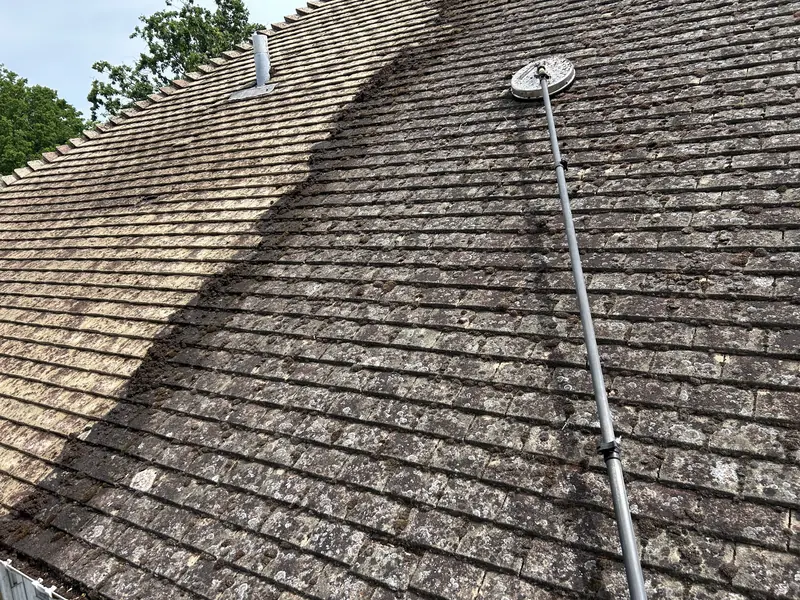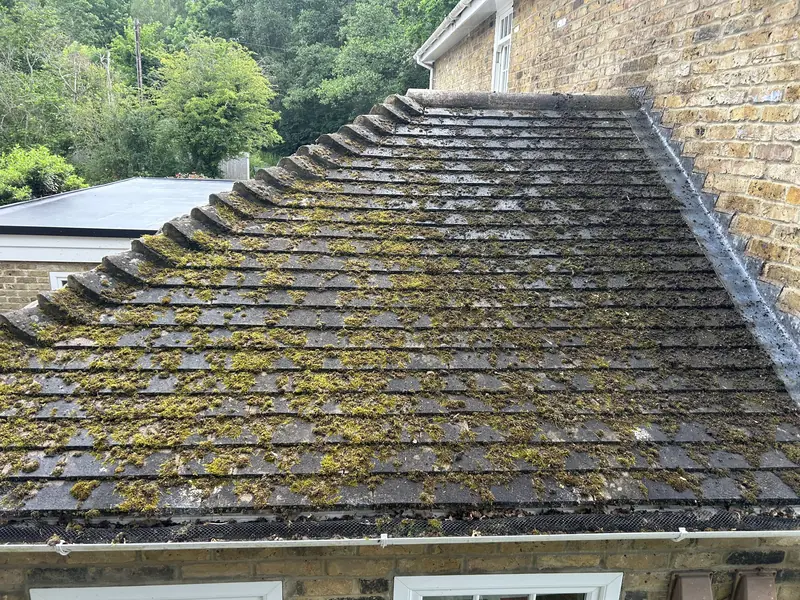
Moss on a roof is common across Essex, especially on older concrete tiles. It can look harmless, even attractive, but it is worth keeping on top of.
Why moss grows
Moss likes damp, shade and a rough surface to cling to.
- Shade. Roof slopes that face north, or sit under trees, stay damp for longer.
- Rough tiles. Concrete and clay tiles have a textured surface that holds spores and moisture.
- Debris. Leaves and dirt caught on the roof give moss somewhere to root.
Once it starts, moss holds water like a sponge, which helps more moss grow.
Why it matters
- It blocks gutters. Moss breaks off in wind and rain and washes into gutters and downpipes, where it builds up. See signs your gutters are blocked.
- It holds water on the roof. Thick moss keeps tiles wet for longer.
- It can lift tiles. Clumps growing between tiles can push them up and let water get underneath.
- It looks untidy. A roof covered in moss can make a whole house look neglected.
What to do about it
Moss can be removed from the roof and the roof treated afterwards to slow regrowth. The right approach depends on how much moss there is and what else is on the roof. We explain the options in moss removal or roof cleaning.
Please don’t walk on a roof yourself to scrape moss off. Tiles can crack and roofs are dangerous places to work.
See moss removal or ask for a quote.