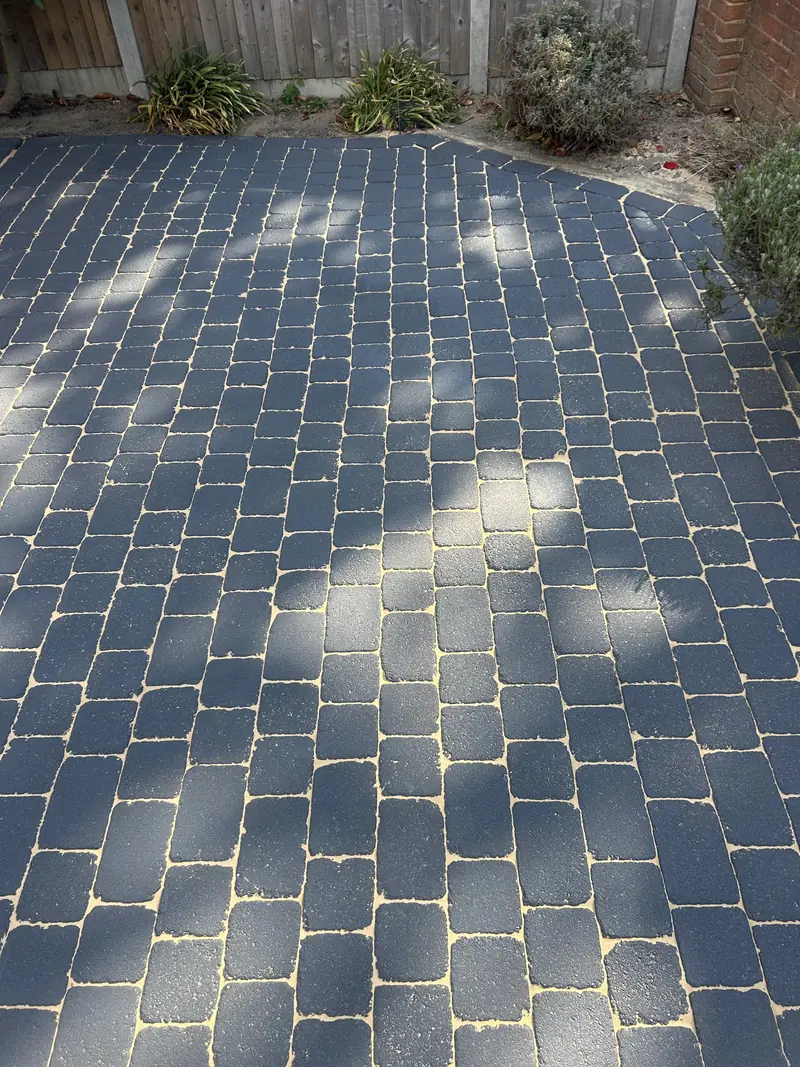
Look closely at a block-paved drive and you’ll see thin lines of sand between the blocks. That sand matters more than it looks.
What the joint sand does
Block paving is laid on a bed of sand, and the gaps between the blocks are filled with fine sand. That jointing sand locks the blocks together so they spread the weight of cars and feet. Without it, blocks can shift, rock and sink.
Why it goes missing
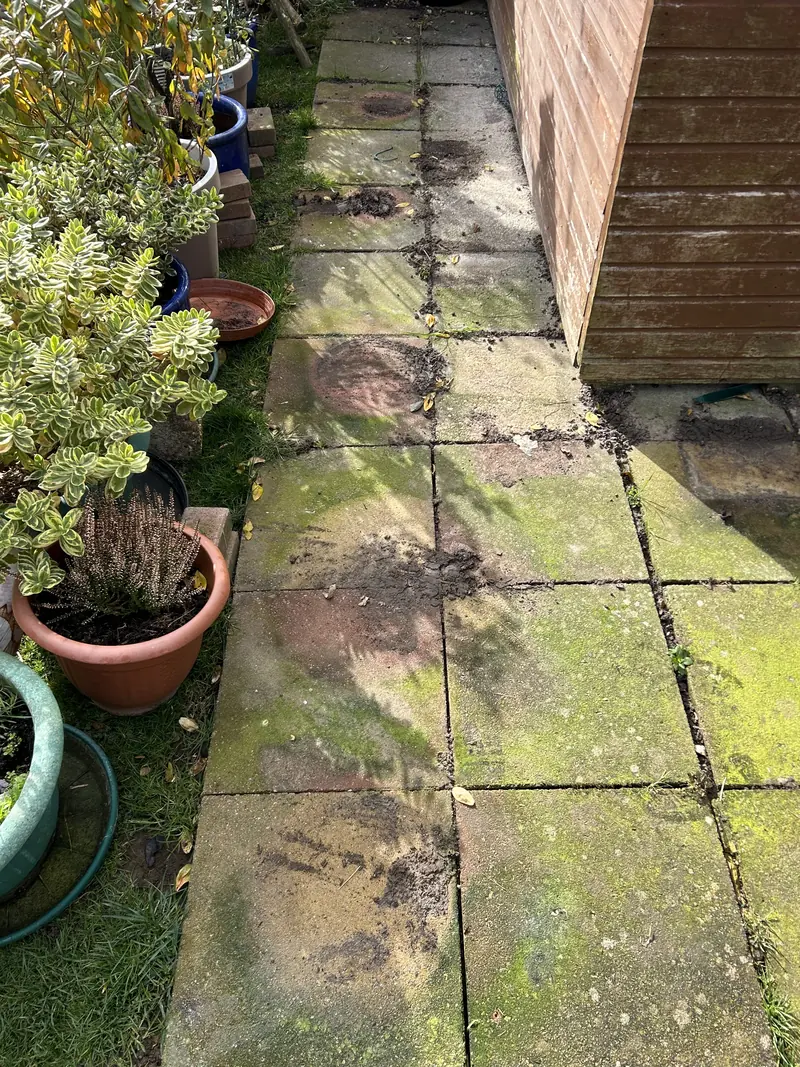
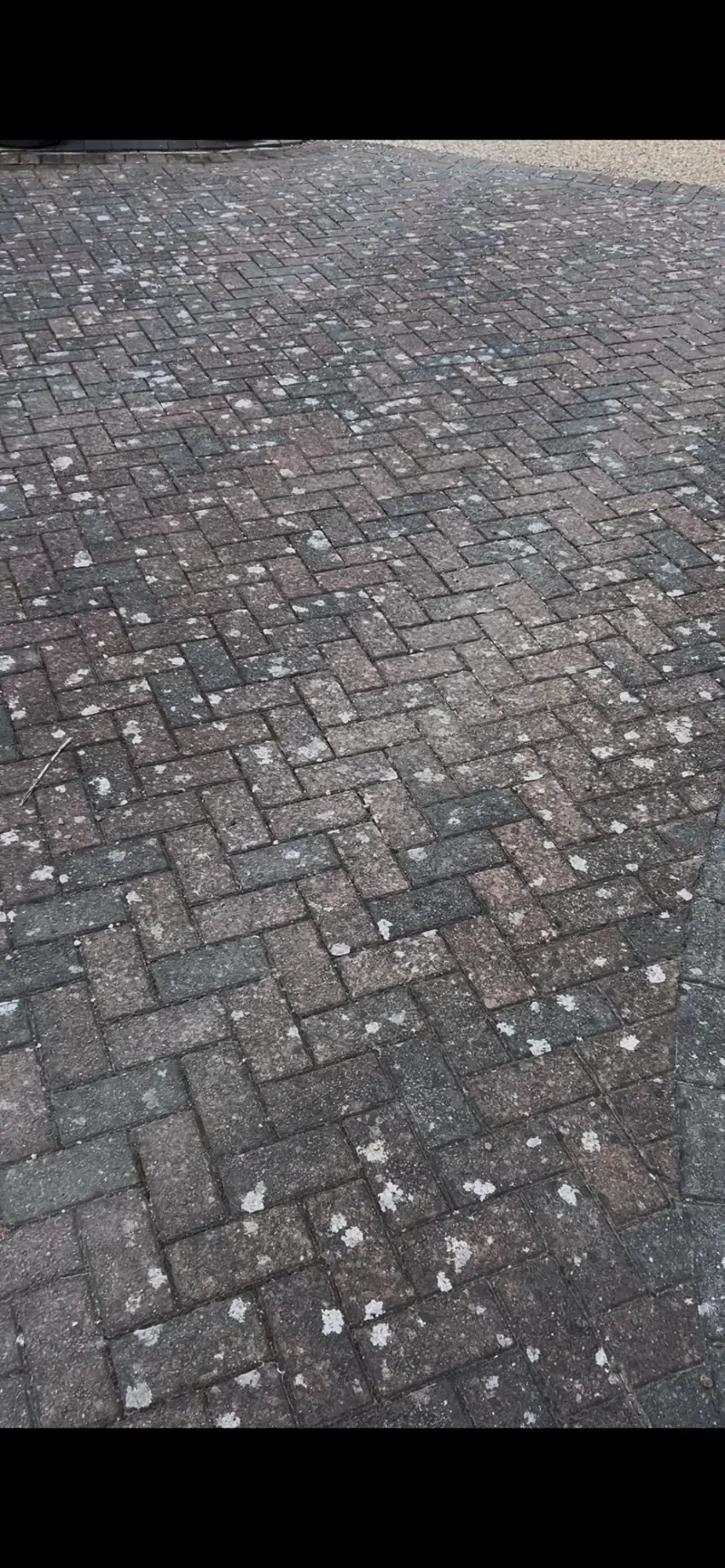
Over time the jointing sand is lost to rain, sweeping, weeds and moss. Pressure washing a driveway also removes some of it, along with the dirt and moss growing in the joints.
Why kiln-dried sand
Kiln-dried sand is very fine and completely dry, so it flows down into narrow joints and fills them fully. Wet or coarse sand clumps and sits on the surface instead.
After cleaning, the sand is brushed across the paving and worked into the joints until they’re full. The surplus is swept away.
The finished look
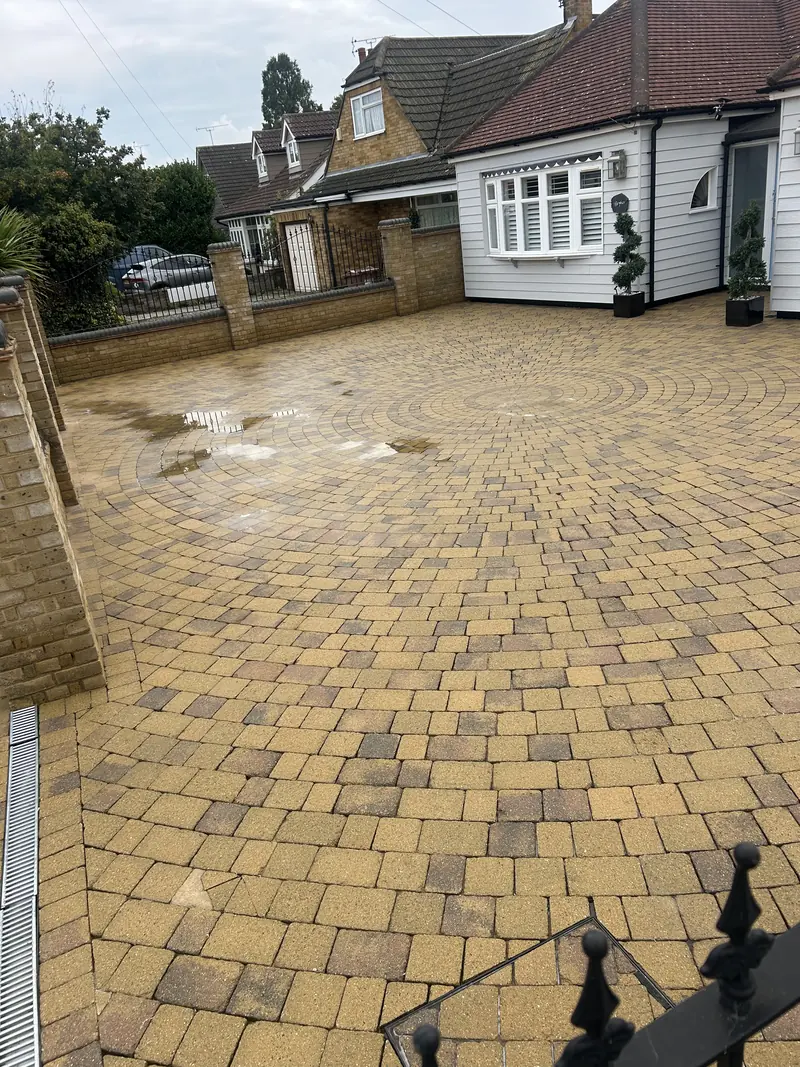
Freshly sanded joints make block paving look crisp and finished. You can see it in our photos of re-sanded driveways, where pale lines of new sand outline each block.
Does it stop weeds?
Full joints leave less room for weed seeds to settle, but weeds can still grow in time. See weeds in block paving.
We re-sand block paving with kiln-dried sand after cleaning where it’s needed. See driveway cleaning or ask for a quote.